
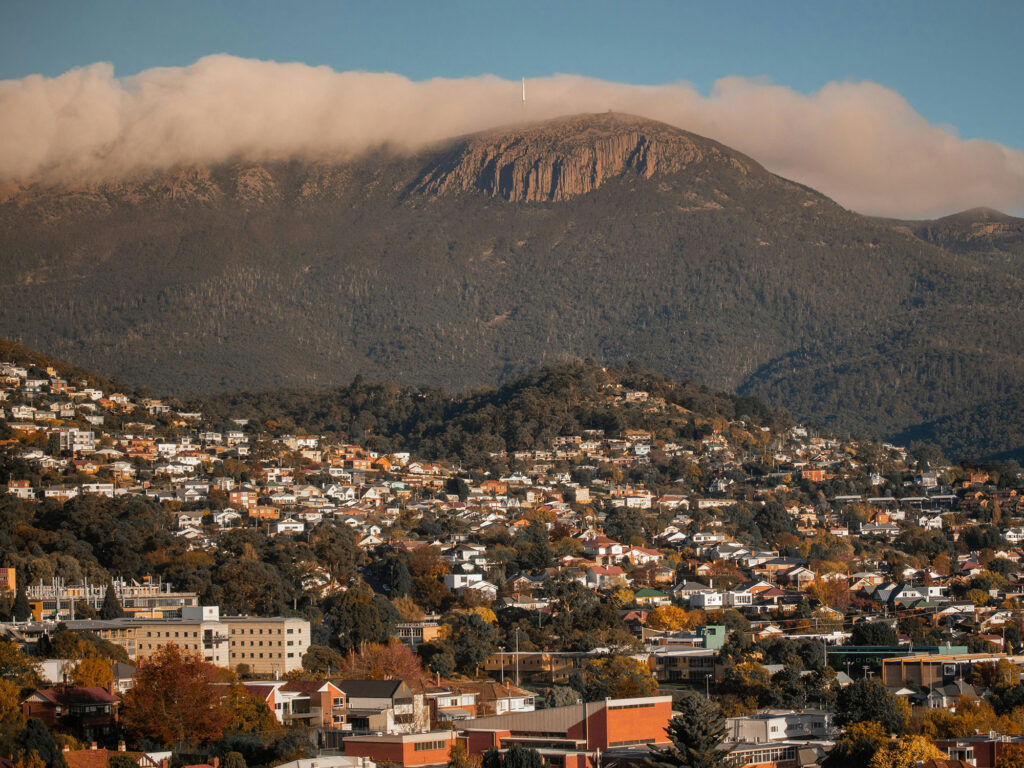
A changing landscape for mainland migration
The winding dirt road to Collinsvale narrows as it ascends into the Kunyani and Mount Wellington ranges of southern Tasmania. Here, dense eucalyptus trees filter the sunlight, and wonky weatherboard homes dot the landscape. A quiet migration is occurring across these southern peaks.
Australians from the mainland are abandoning crowded urban centres for secluded, forested valleys. They arrive seeking space, sustainable practices, and the freedom to disconnect from modern excess.
Seeking space in the southern ranges
Liz Dunlop and James MacAlpine represent a growing movement of mainlanders crossing the Bass Strait. Born and raised in New South Wales, the couple decided to move interstate to find breathing room.
According to Alexandra writing for The Social Herd, the pair sought an environment that offered rural seclusion while remaining close to a capital city. They found their ideal property exactly 20 kilometres northwest of Hobart. The three-acre hobby farm borders the dense foliage of Myrtle Forest.
A sturdy pine picket fence, stacked firewood, and lilac hydrangeas mark the entrance to their home. A trickling creek flows steadily through the valley below.
Designing an off-grid existence
Moving to a rugged climate demands a thoughtful approach to housing and energy. The couple established a clear goal to transition their property to a fully off-grid system.
As noted in the original Bush Journal feature, James and Liz aim to work with the land rather than forcing it to conform to mainland standards. This philosophy requires building sustainable energy systems, managing waste responsibly, and harvesting local rainwater. The off-grid approach allows residents to insulate themselves from rising utility prices while reducing their environmental footprint.
Building a sympathetic footprint
Off-grid living requires more than solar panels, water tanks, and storage batteries. It demands a profound shift in daily habits and an understanding of local ecology. Liz and James plan to create a natural, immersive space for visitors to experience sustainable living firsthand.
According to the reporting by The Social Herd, the couple wants any additions to the property to remain completely sympathetic to the surrounding environment. Liz states that they do not want to commercialise their home in any way. They simply wish to show others how to live harmoniously with the native landscape.
Their commitment highlights a broader lifestyle trend among new arrivals to the island state. Mainlanders are no longer moving south merely to secure larger blocks of land. They are arriving with a deep desire to preserve the untamed mountain regions of Tasmania.
For residents of the Mornington Peninsula who value hinterland sustainability, this Tasmanian tree-change offers a compelling blueprint. By choosing self-sufficiency, these new residents ensure their impact on the landscape remains incredibly light. This careful approach to regional migration secures natural beauty for future generations.