
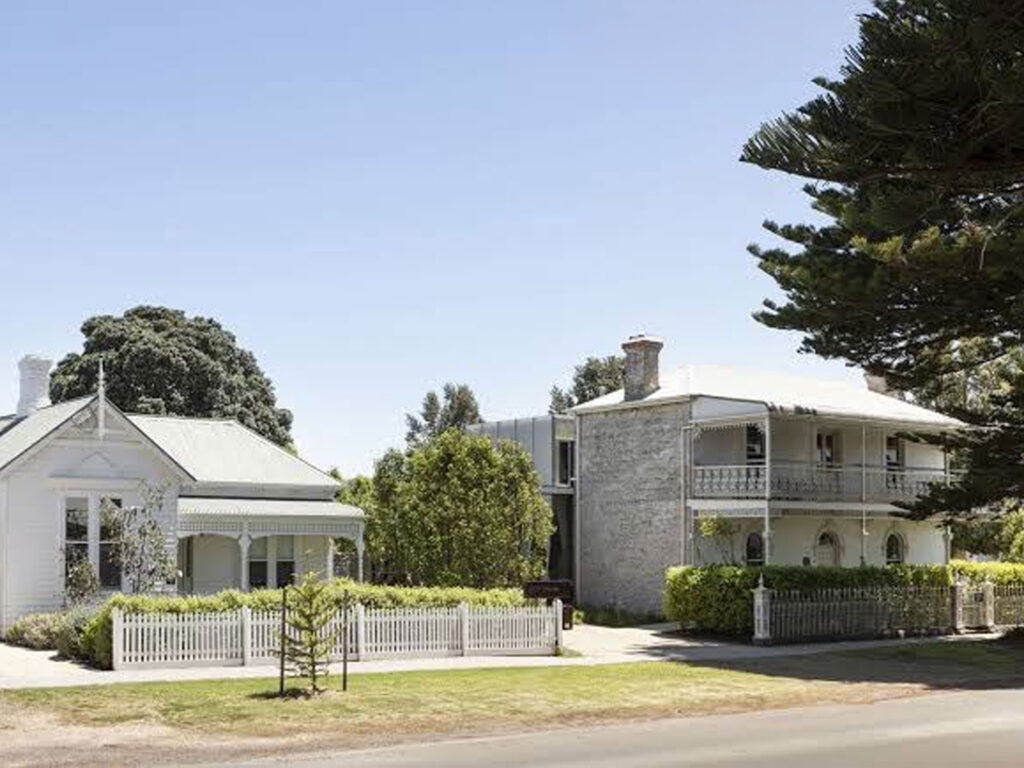
Along Victoria’s windswept southwest coast, Port Fairy maintains a quiet architectural identity. Historic whaler cottages constructed from volcanic bluestone and white-painted weatherboard sit comfortably against the rugged backdrop of the Moyne River and Bass Strait.
Homeowners and designers in the region take direct cues from this enduring landscape. They create living spaces that balance historical weight with a relaxed, coastal sophistication.
The vernacular verandah
A defining feature of the local lifestyle is the traditional verandah. Residents use these semi-outdoor rooms to engage with their neighbours and enjoy the crisp maritime air.
Melbourne practice Sibling Architecture drew heavily on this custom when designing twin residential properties in the township. By introducing contemporary, roofless verandah courtyards, the architects honoured the social streetscape while updating its residential form.
Modern builds across Port Fairy increasingly embrace materials that actively respond to the harsh coastal elements. Farnan Findlay Architects demonstrate this contextual approach in their residential projects.
Their local designs often utilise robust external timber cladding. As the wood silvers naturally in the salt air, the structures blend seamlessly into the surrounding coastal tea-trees.
Textures of the coast
Inside these seaside homes, the focus shifts toward tactile finishes and abundant natural light. Local interiors deliberately step away from the highly polished aesthetics seen in metropolitan spaces, championing an understated, architectural simplicity.
Designers incorporate recycled Australian hardwoods, raw concrete, and locally quarried stone. These robust materials anchor the interior spaces and echo the rocky shoreline located just beyond the front door.
Balancing heritage preservation with modern comfort remains a key priority for many local homeowners. Brunswick design studio Multiplicity achieved this balance successfully with Drift House.
Their interior work highlights how heavy nineteenth-century stonework can pair beautifully with minimalist joinery, natural fibres, and clean architectural lines.
Sourcing local elements
Furnishing a coastal home in this region requires a thoughtful approach to both comfort and durability. Soft furnishings crafted from heavy linen and breathable cotton reflect the relaxed seaside atmosphere.
Interior colour palettes draw directly from the immediate natural environment. Muted sages, soft greys, and deep ocean blues soften the rooms and ensure spaces feel warm during the chilly southern winters.
Decorating these homes also involves supporting the creative community that thrives in the region. Homeowners frequently source ceramic tableware, landscape photography, and woven textiles from local artisans.
These handcrafted objects add layers of personal storytelling to a living room or kitchen. They also reinforce a sustainable, hyper-local approach to home design that avoids mass-produced trends.
Living in Port Fairy ultimately dictates a design philosophy grounded in nature and long-standing community traditions. Houses are built carefully to withstand the wind and salt, while their interiors offer a serene, protective sanctuary.
By choosing honest materials and respecting historical forms, residents design Port Fairy coastal homes that reflect their authentic local character. These calm spaces remain inherently connected to their unique stretch of the Victorian shoreline.